Welcome to DU!
The truly grassroots left-of-center political community where regular people, not algorithms, drive the discussions and set the standards.
Join the community:
Create a free account
Support DU (and get rid of ads!):
Become a Star Member
Latest Breaking News
Editorials & Other Articles
General Discussion
The DU Lounge
All Forums
Issue Forums
Culture Forums
Alliance Forums
Region Forums
Support Forums
Help & Search
Environment & Energy
Showing Original Post only (View all)
How U.S. states can attract fusion power plants: A new CFS white paper [View all]
https://blog.cfs.energy/five-ways-us-states-can-attract-fusion-power-plants/March 9, 2026 by Kristen Cullen [VP Global Policy & Public Affairs]
…
But what if you want safe, clean fusion energy to come not just to the world, but to your state? Our experience might help you out. This post offers a quick look at what’s important, but we’ve also published a white paper on U.S. state actions to attract commercial fusion development. You can download it here or read the embedded version below.
…
We expect our first ARC fusion power plant will start putting watts on the grid in Chesterfield County, Virginia, in the early 2030s. Here at CFS, we’re often asked about the right policies states can implement to attract the fusion industry and tap into the benefits that fusion energy promises. We know firsthand what can be encouraging and what can be a deterrent to companies like us that are developing fusion power plants in the coming years.
A global race for fusion is shaping up: there are now 53 fusion energy companies around the world that have raised over $10 billion in capital. With more than half of the fusion industry located in the U.S., states have a unique opportunity to lead the way in deploying this new energy source within their borders. Ultimately, leading in fusion energy will mean leading in economic development opportunities and clean energy technology.
Becoming the leader in commercial fusion power takes a willingness to be innovative with policy. While we acknowledge each state is different, the following high level policy ideas are a starting point for consideration for states wanting to attract private fusion companies such as CFS and wanting to be at the forefront of clean, firm, dispatchable, and affordable energy. As CFS works to bring fusion power to the grid, we appreciate the chance to talk and partner with states to explore how to adopt innovative policy structures to support fusion power generation development.
…
…
But what if you want safe, clean fusion energy to come not just to the world, but to your state? Our experience might help you out. This post offers a quick look at what’s important, but we’ve also published a white paper on U.S. state actions to attract commercial fusion development. You can download it here or read the embedded version below.
…
We expect our first ARC fusion power plant will start putting watts on the grid in Chesterfield County, Virginia, in the early 2030s. Here at CFS, we’re often asked about the right policies states can implement to attract the fusion industry and tap into the benefits that fusion energy promises. We know firsthand what can be encouraging and what can be a deterrent to companies like us that are developing fusion power plants in the coming years.
A global race for fusion is shaping up: there are now 53 fusion energy companies around the world that have raised over $10 billion in capital. With more than half of the fusion industry located in the U.S., states have a unique opportunity to lead the way in deploying this new energy source within their borders. Ultimately, leading in fusion energy will mean leading in economic development opportunities and clean energy technology.
Becoming the leader in commercial fusion power takes a willingness to be innovative with policy. While we acknowledge each state is different, the following high level policy ideas are a starting point for consideration for states wanting to attract private fusion companies such as CFS and wanting to be at the forefront of clean, firm, dispatchable, and affordable energy. As CFS works to bring fusion power to the grid, we appreciate the chance to talk and partner with states to explore how to adopt innovative policy structures to support fusion power generation development.
…
—
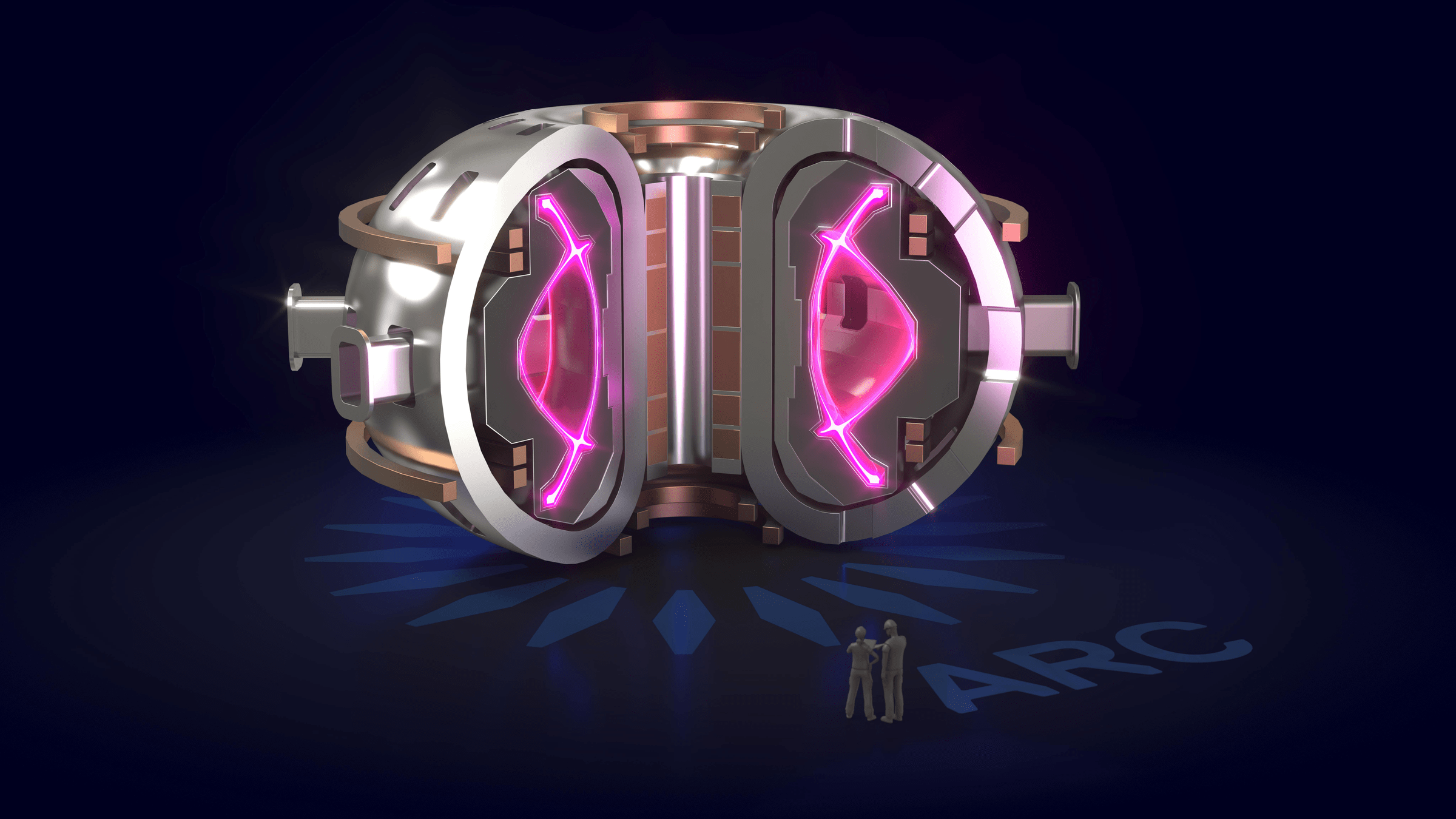
FWIW: Commonwealth Fusion Systems, a spin-off from MIT is working on a much smaller “tokomak” reactor design than ITER, made possible by new “high temperature” superconducting (HTS) magnets. They’re currently working on a demonstration reactor, called SPARC, expected to produce "net energy.” — “Q>1” in 2027.
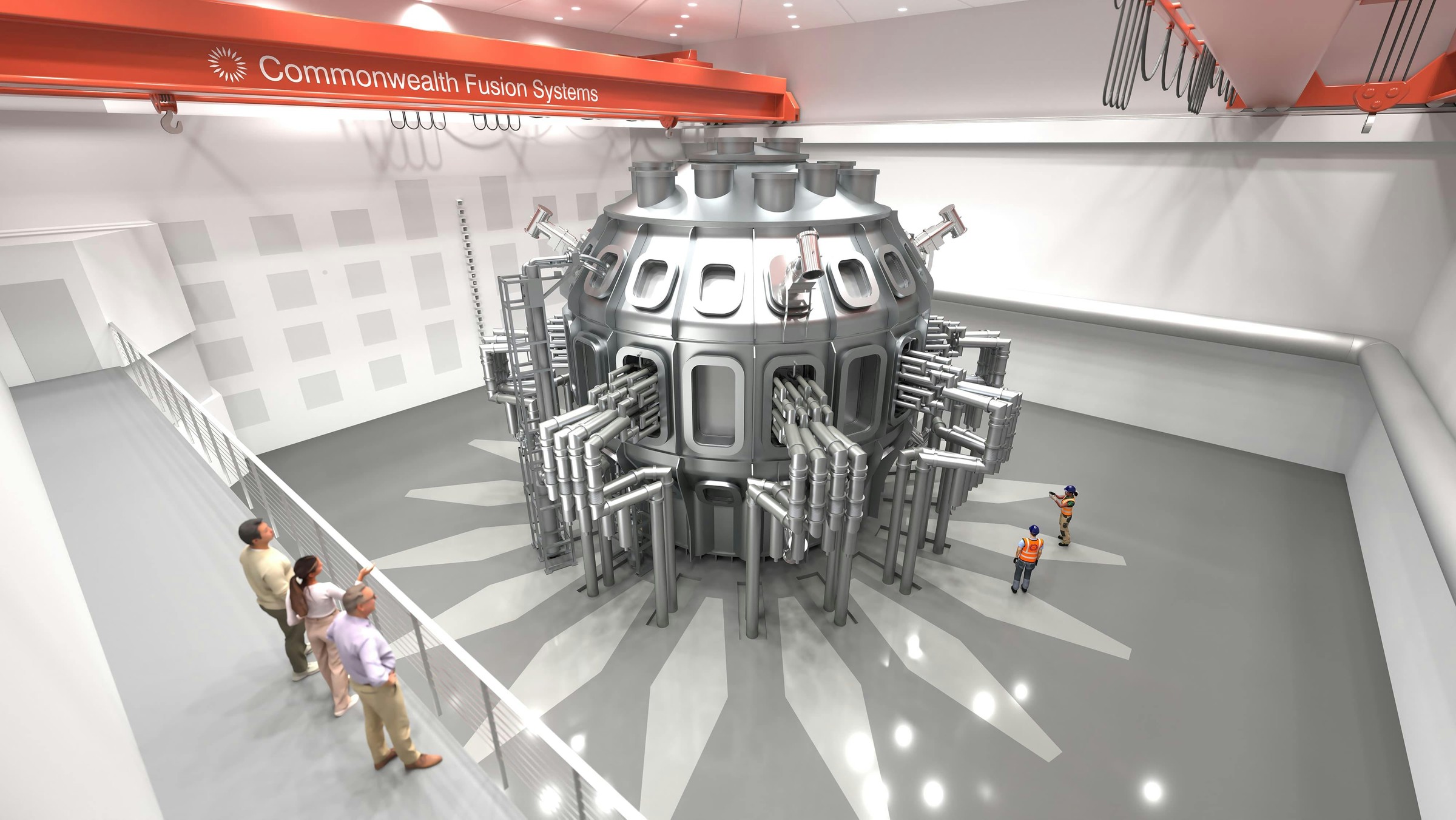
The plan is to quickly follow SPARC with a commercial reactor ARC (mentioned above) a plant intended to produce “net electricity” something no fusion reactor has accomplished to date.
…
ARC is designed to be commercial, incorporating market feedback so it’ll slot seamlessly into the power grid. It checks all the boxes for the electricity generation market: a firm supply of clean, safe, and affordable energy that works for dispatchable or baseload demand, all from a facility that can be built just about anywhere. And we're talking to customers now who want to sign up for its power.
ARC will be flexible and familiar. To the grid, it’ll look just like the 2,000 natural gas plants already built in the US — except that ARC won’t release any carbon dioxide or other greenhouse gases. Operators will be able to ramp ARC’s power output up and down faster than possible with most fossil plants, making it easy to integrate with renewable resources and adapt to grid or market changes. More likely, ARC will supply steady baseload power that’s increasingly needed to support new critical infrastructure and replace fossil fuel plants.
…
ARC will be safe. Unlike nuclear fission plants, fusion energy has no chance of runaway chain reactions or meltdowns, and there’s no long-lived or high-level nuclear waste. US regulations treat fusion power plants similarly to how they treat particle accelerators, not nuclear fission plants — an approach that recognizes fusion’s inherent safety and supports its rapid scaling.
…
ARC fuel will be abundant, ubiquitous, and cheap. The fusion process heats two forms of hydrogen, deuterium and tritium, into a highly energetic plasma — a cloud of particles that fuse and release energy. A liquid “blanket” captures that energy as heat, then transfers it to water that turns a steam turbine to generate power. Deuterium is available nearly everywhere and can be filtered from seawater, while ARC blankets will naturally produce tritium. And because only small amounts are needed, 30 years of ARC fuel can be delivered by a single truck when a new plant opens, with no price change risks down the line and no linkages to globally fraught supply chains. With fusion fuel costs forecast to become effectively negligible, volatile power prices driven by fluctuations in natural gas prices will be a thing of the past.
…
ARC is designed to be commercial, incorporating market feedback so it’ll slot seamlessly into the power grid. It checks all the boxes for the electricity generation market: a firm supply of clean, safe, and affordable energy that works for dispatchable or baseload demand, all from a facility that can be built just about anywhere. And we're talking to customers now who want to sign up for its power.
ARC will be flexible and familiar. To the grid, it’ll look just like the 2,000 natural gas plants already built in the US — except that ARC won’t release any carbon dioxide or other greenhouse gases. Operators will be able to ramp ARC’s power output up and down faster than possible with most fossil plants, making it easy to integrate with renewable resources and adapt to grid or market changes. More likely, ARC will supply steady baseload power that’s increasingly needed to support new critical infrastructure and replace fossil fuel plants.
…
ARC will be safe. Unlike nuclear fission plants, fusion energy has no chance of runaway chain reactions or meltdowns, and there’s no long-lived or high-level nuclear waste. US regulations treat fusion power plants similarly to how they treat particle accelerators, not nuclear fission plants — an approach that recognizes fusion’s inherent safety and supports its rapid scaling.
…
ARC fuel will be abundant, ubiquitous, and cheap. The fusion process heats two forms of hydrogen, deuterium and tritium, into a highly energetic plasma — a cloud of particles that fuse and release energy. A liquid “blanket” captures that energy as heat, then transfers it to water that turns a steam turbine to generate power. Deuterium is available nearly everywhere and can be filtered from seawater, while ARC blankets will naturally produce tritium. And because only small amounts are needed, 30 years of ARC fuel can be delivered by a single truck when a new plant opens, with no price change risks down the line and no linkages to globally fraught supply chains. With fusion fuel costs forecast to become effectively negligible, volatile power prices driven by fluctuations in natural gas prices will be a thing of the past.
…
21 replies
 = new reply since forum marked as read
Highlight:
NoneDon't highlight anything
5 newestHighlight 5 most recent replies
= new reply since forum marked as read
Highlight:
NoneDon't highlight anything
5 newestHighlight 5 most recent replies
= new reply since forum marked as read
Highlight:
NoneDon't highlight anything
5 newestHighlight 5 most recent replies
How U.S. states can attract fusion power plants: A new CFS white paper [View all]
OKIsItJustMe
Mar 16
OP
Given our new reality of server "farms" popping up everywhere, you're probably right.
FadedMullet
Mar 16
#7
Well, actually, some does come from methane from cows, although they generally belch it out
OKIsItJustMe
Mar 17
#20